First published on Bowen Street Press 2021
What if you wanted to bring a book to life via the power of the recorded human voice? Audiobooks are everywhere, their sales have boomed during these past pandemic years, so what’s so great about them? And how does one get commissioned?
Baby’s first audiobook
The commissioning of an audio book generally happens in one of two ways:
- A book that has already been written and published to print can be read by an audiobook reading voice actor
- A publishing company can seek to capitalise on the ever-burgeoning upturn in audiobook popularity and commission one straight to voice.
The history of audiobooks-as-audiobooks is almost 100 years old, the first was published in 1931 or 2, after the US Library of Congress developed ‘Books for the Adult Blind Project’ and works by Helen Keller, Edgar Allen Poe, and even parts of the Bible were recorded. But words on ‘tape’ (shellac, probably) began with Thomas Edison’s phonograph in 1877, and his spoken word recording of Mary Had a Little Lamb. The technology came shortly after the invention of the telephone; the benefits of hearing voices and communication had clearly been recognised. By 1997, the first digital audio player was debuted by Audible and by the 2020s, the industry is worth billions each year with a 39% growth in titles published in 2020 compared with 2019, a growing trend since the early 2000s in Australia and beyond.
Digital words: what’s so great about audiobooks?
Is it the convenience of being able to ‘read’ a book while we run errands? Is it the soothing recognition of a familiar voice that is maybe even more engaging than the voices in our head? Does it hark back to being read to sleep by a parent? Does a book being read to us help us feel less lonely in times of great isolation? Is it simply the best ‘homebound hobb[y]’ ever? There’s every indication that audiobooks fill some deeply human need, as evidenced by their continued growth in the publishing industry. There’s also proof that ‘listening to your literature stimulates the brain just as much as reading it does’, and we’re gradually doing away with the snobbiness that says audiobooks are ‘cheating’.
Unfamiliar familiarity: audiobook narrators aka ‘voiceover artists’
So, you’re turning a book into an audiobook—to soothe the lonely masses or maybe to increase sales—whyever. How can you get this book saved as an audio file, ready to accompany someone’s next shopping trip or bedtime ritual? ‘The narrator is key to the success of an audiobook’, so there must be more to it than just reading the book out loud. What does it take to be a good audiobook narrator, a ‘voiceover artist’, and why would you try it? It doesn’t necessarily mean you need to hire (or be!) the loquacious Stephen Fry (of the Harry Potter audiobooks infamy) or smouldering Jake Gyllenhaal (who took The Great Gatsby to even loftier heights of celebrity). And yes, a well-known narrator can increase a books’ listenability and popularity but it isn’t everything. A good voiceover artist will get listeners coming back for more, and probably reading books we otherwise may not have been drawn to, outside those ‘safe’ genres.
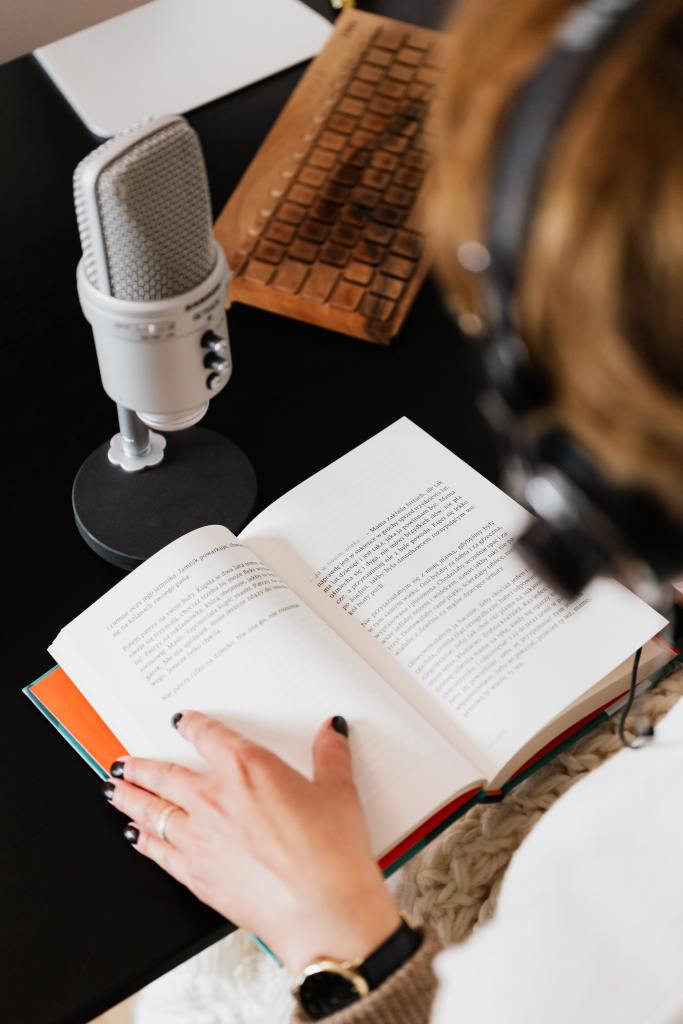
Voiceover artistry takes a surprising physical toll (reading out loud for hours and hours is tiring according to the infamous Elizabeth Acevedo, Emily Woo Zeller and Renee Raudman, audiobook voiceover artists, extraordinaire), and of course loving books and reading is a must. You have to be really good; shit voices don’t make the cut. Michele Debczak says you’ll probably need to have a background in (stage) acting, voice-over work like TV or radio commercials, yoga instruction, or even primary school teaching (due to the sheer amount of reading for the kids!). It pays well, you can make around $100 an hour, and there are ‘body-wide benefits’ to doing all that exhausting ‘deep breathing, measured talking and controlled diaphragm work’. You also might get sneak-peaks at as yet unreleased books, or even to meet authors! You can work from home and you can establish good working connections with authors and audio engineers; being an audiobook narrator opens doors.
The sound of striking a cost/benefit harmony
And if you don’t have the sizeable budget that is required to hire an audiobook voiceover artist and the audio engineer who’ll edit and mix the files? You can do it yourself, of course! Not only does this cut publishing costs, but it can actually enhance a book—reading aloud can ‘improve your book’s natural flow’ and help you ‘develop an ear for writing that sounds good’. There are companies like ACX (the Audiobook Creation Exchange) and findawayvoices.com who can either connect you to voiceover artists or let you do your own recording.
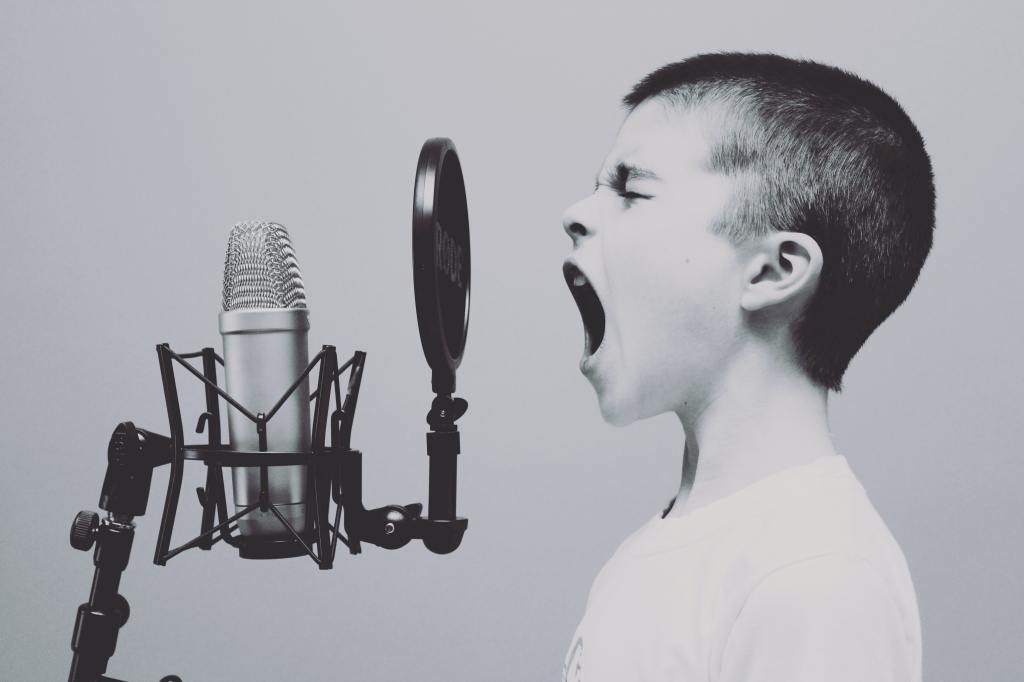
Audiobooks are good for readers, writers and listeners all; commission an audiobook today!
 Kitty Literature